




Dr Mitra Tahvildarian, Ph. D.

Featured on:

FOX News. NBC News, ABC News, CBS News. USA Today & Many More

What is Functional Medicine?

Functional Medicine, as offered through our services, is a wellness-based program focused on supporting overall health through lifestyle, nutrition, and education.

Our approach is designed to help individuals better understand potential lifestyle, nutritional, and environmental factors that may influence their well-being. We focus on supporting the body’s natural balance, not diagnosing or treating medical conditions

Functional Medicine Testing

Important Disclaimer

This is a wellness program and not a medical service.

We do not diagnose, treat, cure, or manage medical conditions, and we do not prescribe medications or provide medical treatment.

Participation in this program requires that all clients remain under the care of their licensed medical provider (MD, DO, or other qualified healthcare professional).

Clients are strongly encouraged to inform their physician that they are participating in this wellness program.
Any recommendations or wellness strategies provided should be reviewed and approved by their treating physician, especially if the client has an existing medical condition or is taking medications.

Our Approach

Our wellness program focuses on:

  • Nutrition and dietary education
  • Lifestyle modification (sleep, stress, movement)
  • General wellness support
  • Education on supplements and natural products

We may provide personalized wellness guidance regarding nutritional supplements, including vitamins, minerals, herbs, and nutraceuticals, to support overall health and well-being.

These recommendations are intended for wellness support and educational purposes, and are not intended to diagnose, treat, or manage any medical condition.

Clients are encouraged to review all supplement use with their licensed healthcare provider, especially if they have a medical condition, are taking medications, or are under medical care.

Any decisions regarding supplement use should be made in collaboration with the client’s treating physician, to ensure safety and appropriate integration with their medical care.


We do not prescribe, recommend, or manage supplements as treatment for any disease or medical condition.

How Functional Medicine Complement conventional medicine?

Conventional medicine is a medical care model that is highly effective for acute health situations such as accidents, heart attacks, severe infections, or emergency conditions. In these cases, timely intervention by a licensed medical doctor—using modern technologies, medications, and procedures—can be essential and life-saving.

We recognize and respect the important role of conventional medicine and encourage individuals to work closely with their licensed healthcare providers for diagnosis, treatment, and medical care.

Our services are designed to complement—not replace—medical care by focusing on lifestyle, nutrition, and wellness education to support overall well-being.

What are the principles of Functional medicine for chronic diseases?

To combat chronic health conditions, Functional Medicine uses two scientifically grounded principals:

1- Add what’s lacking in the body to push its physiology back to a state of optimal functioning

2- Remove anything that impedes the body from moving toward this optimal state of physiology.

Functional medicine is a wellness-oriented approach that focuses on supporting overall health through lifestyle, nutrition, and personalized wellness strategies.

Rather than focusing solely on symptoms, this approach looks at how various factors such as nutrition, environment, stress, and daily habits—may influence overall well-being.

Our services are designed to provide education, guidance, and support to help individuals make informed lifestyle choices that promote balance and vitality.

We do not diagnose, treat, cure, or manage medical conditions, and our services are not a substitute for medical care.

All individuals are encouraged to work with their licensed healthcare providers for diagnosis, laboratory testing, and medical treatment.

What is the downside of treating symptoms versus treating the person?

Instead of focusing solely on symptom relief, conventional medicine often uses medications to manage conditions such as acid reflux or heartburn. These treatments can be important and should always be directed by a licensed healthcare provider.

Our wellness-based approach is different in that it focuses on supporting healthy lifestyle habits, nutrition, and overall well-being, rather than diagnosing or treating medical conditions.

We do not evaluate, diagnose, or determine the medical causes of symptoms. Instead, we provide education and guidance to help individuals better understand how factors such as nutrition, daily habits, and stress may influence their overall wellness.

All individuals are encouraged to work closely with their licensed healthcare providers for any diagnosis, medical evaluation, or treatment decisions.

What would be your experience of Functional Medicine?

When you work with us, the first step is a comprehensive review of your health history, lifestyle, and wellness goals. This process is designed to better understand patterns that may be influencing your overall well-being.

We focus on organizing available information to identify potential areas where lifestyle, nutrition, and daily habits may be optimized.

Additional wellness insights may be supported by laboratory testing that is ordered and interpreted by your licensed healthcare provider. We do not order, diagnose, or interpret medical tests.

Our role is to provide education and guidance to help you understand general wellness factors and to support informed discussions with your healthcare provider.

BALENCING OUR HORMONES FROM THE SOURCE AND ROOT CAUSE

Hormones are the body’s chemical messengers that travel through the bloodstream and help regulate communication between tissues and organs. They influence many important functions, including metabolism, mood, reproduction, and overall balance within the body.

Because hormones are highly sensitive, even small changes in their levels may influence how the body functions. For example, variations in estrogen levels may be associated with changes in bone density or overall well-being.

Understanding how lifestyle, nutrition, stress, and environmental factors may influence hormonal balance can support overall wellness.

This information is provided for educational purposes only and is not intended to diagnose, treat, or manage any medical condition. Individuals should consult their licensed healthcare provider for any medical concerns or treatment decisions.

Hormone imbalances can happen at any age and can be caused by many factors. The following outlines some of the common causes and symptoms of hormone imbalances.

There can be many underlying causes of hormone imbalance:

Chronic inflammation
Variations in methylation pathways (such as MTHFR-related differences)
Gut microbiome imbalances
Nutritional factors or dietary patterns
Ongoing stress
Environmental exposures
Life stage changes (such as menopause or andropause)
Changes in body composition

Some individuals may also have underlying medical conditions that require evaluation and management by a licensed healthcare provider.

This information is provided for educational purposes only and is not intended to diagnose, treat, or determine the cause of any medical condition.

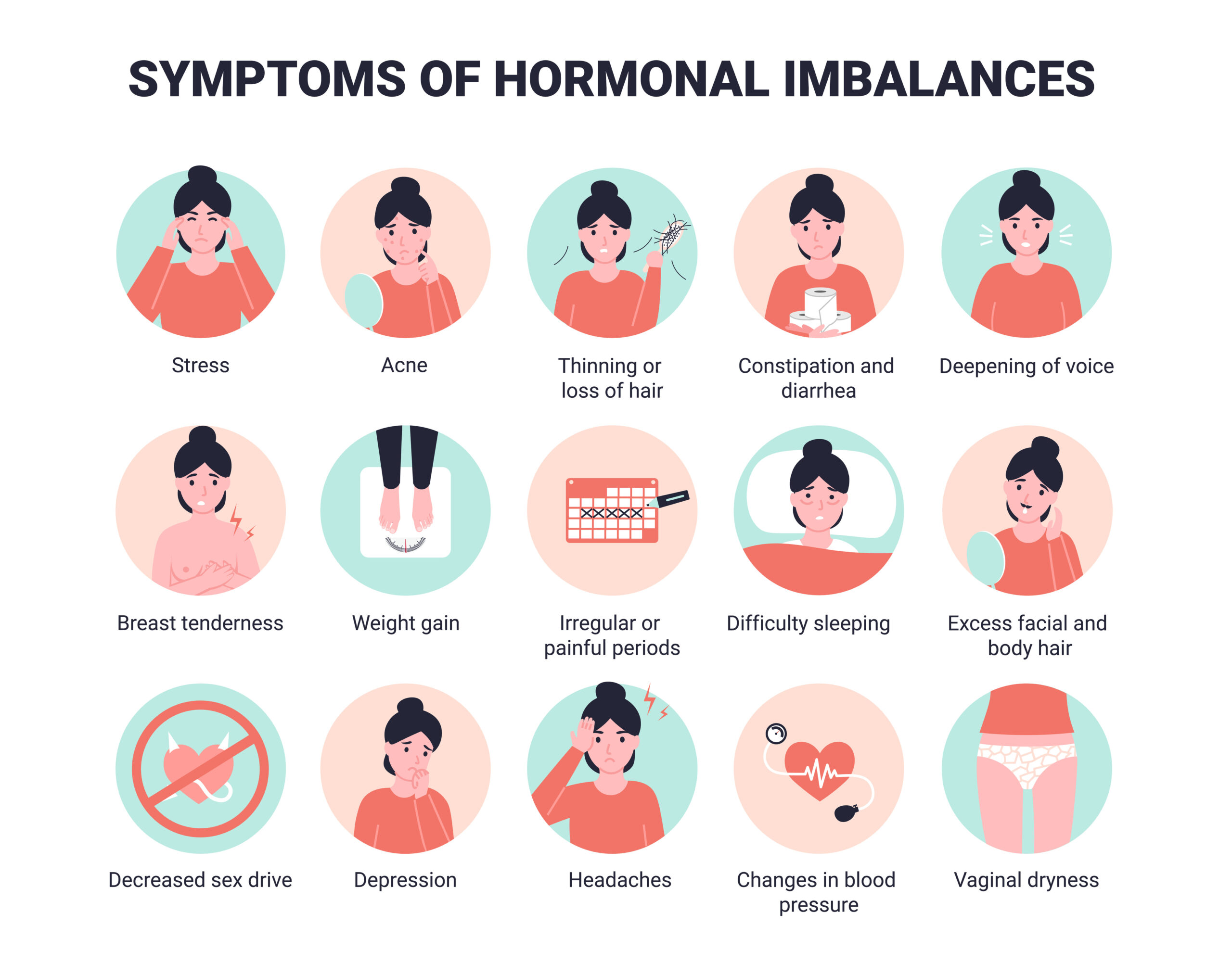
Common wellness experiences related to hormonal changes

Changes in body weight (gain or loss)
Low energy or fatigue
Mood changes or irritability
Difficulty concentrating
Changes in menstrual patterns
Changes in libido
Sleep disturbances
Hair thinning or shedding
Bloating or digestive discomfort
Episodes of feeling warm (such as hot flashes)
Fertility-related challenges

HOW HORMONES AND NUTRIENTS INTERACT​

There are two factors that contribute to widespread hormone imbalance:

IN AGRICULTURAL RESEARCH​

It’s been understood for some time that many of our most important foods have been getting less nutritious. Measurements of fruits and vegetables show that their minerals, vitamin and protein content has measurably dropped over the past 50 to 70 years. Researchers have generally assumed the reason is straightforward: We’ve been breeding and choosing crops for higher yields, rather than nutrition, and higher-yielding crops—whether broccoli, tomatoes, or wheat—tend to be less nutrient-packed.
As Americans, we struggle with deficiencies in our diet including selenium, magnesium, potassium, iodine, and a host of other trace minerals and nutrients.
For now, let’s gain a better understanding of the different hormones and their functions.

Melatonin

You might already be familiar with melatonin as a common sleep-aid supplement. Melatonin supplements mimic what the hormone melatonin does naturally when it’s secreted from the pineal gland, promoting Natural Hormone Balance

  • Fatigue
  • Difficulty sleeping
  • Restlessness
  • Brain fog
Signs of melatonin deficiency include:
Sunshine regulates your circadian rhythm by telling your body when to increase and decrease your melatonin levels. So, the more daylight exposure you can get, the better your body will produce melatonin when it’s time to go to sleep. Also, you can improve melatonin production by avoiding exposure to bright light close to bedtime.

Cortisol

Cortisol is the primary stress hormone of the body. When you produce too much cortisol, it can cause a chain reaction of hormonal imbalances throughout the body, leading to various hormonal changes in women.

The adrenal glands are meant to produce cortisol in small doses during moments of high stress, like when a bear is trying to eat you, for example, but sustained cortisol production can have negative health effects, including:
  • Increased stress
  • Poor sleep
  • Excess fat storage
  • Increased appetite
  • Poor concentration
  • Low energy
  • Decreased alertness
Over time, elevated cortisol levels can reduce your ability to produce other critical hormones, such as:
  • Testosterone
  • Estrogen
  • Progesterone
These imbalances can cause severe mood swings and migraine headaches.
Common signs of high cortisol levels include:
  • Increased appetite
  • Bloating
  • Acid reflux
  • Weight gain
  • Diarrhea
  • Constipation

Testosterone

Testosterone is primarily a male hormone, but both men and women need certain levels of it for optimal health. Low levels of testosterone in men can lead to low sex drive, mood changes, and softer body composition.
For men, testosterone imbalances are tied to a reduction in:
  • Alertness
  • Physical strength
  • Muscle mass
  • Energy levels
  • Motivation
  • Confidence
  • Sex drive
High testosterone levels in women have been linked to:
  • Excess body hair, specifically facial hair.
  • Balding.
  • Acne.
  • Enlarged clitoris.
  • Decreased breast size.
  • Deepening of the voice.
  • Increased muscle mass.

Estrogen

Both men and women produce estrogen, but women produce it in much larger amounts.
Estrogen is the primary sex hormone for women, and it has a massive impact on:
  • Menstruation
  • Menopause
  • Pregnancy
  • Hair growth
  • Muscle mass
Common signs of estrogen imbalance in women include:
  • Mood changes
  • Depression
  • Vaginal dryness or irregular periods

Progesterone

Progesterone is another important female sex hormone that the body uses to balance estrogen levels, balance mood, and influence sleep. It’s made in the ovaries, the placenta, and the adrenal glands.
Common signs of progesterone imbalance in women include:
  • Heavy periods
  • Severe PMS symptoms
  • Depression
  • Mood changes
  • Weight gain
  • Changes in appetite

Leptin

Leptin’s job to signal the rest of your body that you’ve had enough to eat when your stomach is full and directs fat metabolism. It’s easy to see how problems with leptin production might cause you to gain weight.
Leptin also helps regulate sex hormones as well as several other important hormones throughout the body.

Thyroid hormones

In a lot of ways, thyroid hormones are the most important hormones in the body. They affect the inflammation response and literally everybody system.
Thyroid disorders can be strongly affected by diet. Certain vegetables, like broccoli and cauliflower, can have negative effects on thyroid production when eaten raw. Always cook broccoli and cauliflower thoroughly if you suspect you may have a thyroid condition.
Thyroid hormones impact your:
  • Weight
  • Sleep quality
  • Energy levels
  • Body temperature
  • Libido
  • Metabolism
Common signs of thyroid hormone imbalance:
  • Thinning hair
  • Hair loss
  • Weight gain
  • Weight loss

Insulin

Insulin helps the body process sugar by reducing glucose levels in the blood. When you have too much sugar in your diet, insulin production can become fatigued.
Health consequences of chronically high insulin levels can include:
  • Diabetes
  • Changes in appetite
  • Reproductive issues
  • Elevated estrogen
If this article resonates with you, request a free 20 minutes to see if Functional Medicine might be right for you. We will reach out to you to find a time to connect.

Book A Consultation.

We Support Individuals Experiencing Concerns Such As:

Immune & Inflammatory Balance

Individuals experiencing concerns related to immune function, inflammation, and overall resilience

Unexplained Symptoms

Fatigue, low energy, brain fog, bloating, skin concerns, or general discomfort without a clear cause

Mental & Emotional Well-Being

Stress, mood fluctuations, low motivation, sleep challenges, and emotional imbalance

Hormonal Wellness

Concerns related to sleep, energy, mood, weight changes, and overall hormonal balance

Digestive Wellness

Bloating, gas, irregular digestion, food sensitivities, and gut-related discomfort

Metabolic & Energy Support

Energy fluctuations, weight changes, cravings, and metabolic balance

Environmental & Lifestyle Factors

Concerns related to environmental exposures, toxins, and overall lifestyle influences on health

Video Testimonials

Client Testimonials

The perfect blend of Science, Organics, and results! DNA Skin Institute has merged the best of all worlds into their professional line of skin care products. All while avoiding harmful and toxic ingredients. It's what I use and what I recommend to anyone that asks!

Dr. Julie Taguchi, MD. Hematology & Medical Oncologist, Author of "Sex, Lies, & Menopause"

The emphasis DNA Skincare places on chemical free, 100% natural skin care is just one of the many reasons I love them. I incorporate their powerful products into my beauty routine every day. Their scrubs, moisturizers, serums and CrystoStem Frozen products are all non-toxic and work wonders on my skin! Why use anything else!

Stacy Keibler endorses DNA!

Most products out there deplete and strip your natural skin resources while attempting to solve the problems of aging and wear and tear. WHAT I LOVE about DNA CryoStem products is that they, in turn, provide resources that enhance my skin instead of depleting what I naturally have to solve the problem.

Michelle Rodriguez Endorses DNA!

DNA Phyto Collagen Night Creme is like a drink of water for my skin.

Louise Roe TV Host

Dear Mitra, I thank God that you are in my life and that you have made it possible for me to live and enjoy every moment of my life, and I always wish you good health and progress, because the more you progress, the easier it will be for people like me to live.

Romina B Patient

Thank to Dr. Mitra and her team to made me a new, healthy and happy woman. My issues all have been resolved. It is worth every penny, and they have made it so easy to work with them even though I live in Chicago.

Parisa D Patient

New Articles